
Aug 04, 2026
A tunnel freezer manufacturer is a company that converts a food processor’s product, capacity, temperature, hygiene, site and utility requirements into a continuous freezing system with defined performance. The manufacturer’s job is broader than fabricating an insulated enclosure and conveyor. It includes process selection, thermal design, airflow, food-contact engineering, refrigeration integration, controls, sanitation access, testing, documentation, commissioning and lifecycle support.
Choosing the supplier is difficult because quotations often use the same headline terms—stainless steel, energy saving, high efficiency, easy cleaning and customized design—while making different assumptions about product temperature, operating hours, belt loading, defrost and project scope. A low quotation may omit refrigeration, installation, platforms, controls, freight, site supervision, spare parts or performance testing. A high quotation may include valuable risk reduction, or it may simply be expensive. The buyer needs a structured way to distinguish evidence from marketing.
This guide provides a 10-point manufacturer audit and a weighted scorecard. It is designed for industrial food processors sourcing IQF tunnel equipment for seafood, meat, poultry, bakery, prepared foods, vegetables and related products. It also explains what JET Technology should provide during inquiry, engineering, factory acceptance testing and site acceptance so that the commercial agreement can be connected to measurable outcomes.
A tunnel freezer manufacturer delivers an engineered freezing process, the mechanical equipment that executes it and the evidence needed to accept and operate the system. The physical machine is only one part of the purchase.
The first deliverable is process definition. The supplier should identify whether the product needs impingement, crossflow, mesh belt, solid belt, fluidization, plate contact or another approach. This decision depends on product geometry, surface moisture, piece separation, packaging, inlet condition, target temperature and downstream handling. A manufacturer that recommends a model before collecting these inputs is effectively asking the buyer to accept hidden assumptions.
The second deliverable is a thermal and capacity basis. A statement such as “1,000 kg/h” is incomplete unless it defines the product, dimensions, inlet temperature, outlet requirement, belt load, run time and ambient condition. A responsible proposal separates calculated capacity, reference-project capacity and guaranteed capacity. It also states the sampling method that will be used at acceptance.
The third deliverable is hygienic and mechanical design. The belt, supports, enclosure, air ducts, evaporator, fan area, drains, access panels, transitions and maintenance routes must work with the plant’s cleaning program. The supplier should provide drawings showing how operators reach areas that collect soil or frost. Stainless steel alone does not prove cleanability.
The fourth deliverable is integration. The freezer must communicate with upstream cooking, forming, conveying or glazing equipment and downstream inspection, packaging or cold storage. It also interfaces with the refrigeration plant, electrical supply, drainage, compressed air, water and data systems. Scope boundaries should be visible on a responsibility matrix.
The fifth deliverable is project execution. It includes drawings, approvals, production, quality control, FAT, shipping protection, installation instructions, commissioning, SAT, training, manuals, recommended spares and warranty response. The value of a qualified manufacturer is that these elements form one controlled project rather than a collection of unrelated components.
The lowest purchase price is not necessarily the lowest project cost because omitted scope, unstable performance, long sanitation time, excessive product loss and delayed commissioning can exceed the initial saving. A tunnel freezer should be evaluated on total installed and operating risk.
Begin by normalizing every quotation. Create a list that includes the freezer enclosure, conveyor, evaporator, fans, controls, electrical panel, platforms, infeed and discharge transfers, defrost components, refrigeration valves, insulation, drainage, installation supervision, commissioning, product testing, documentation, freight, taxes, spares and training. Mark each item as included, excluded or buyer-supplied. Two prices cannot be compared until the scope is aligned.
Next examine assumptions. One supplier may quote warm product entering at 20°C and another may assume 5°C. One may calculate 20 hours of continuous operation and another may require a defrost after eight hours. One may guarantee the average outlet temperature and another may limit the maximum temperature of the warmest sampled piece. These differences directly affect tunnel length, evaporator size, fan power and refrigeration load.
Operating cost should include fan and conveyor power, refrigeration power, defrost energy, water and chemicals, sanitation labor, planned maintenance, belt replacement, spare parts and product giveaway. Product loss can be particularly important. Even a small difference in dehydration or breakage, multiplied by annual throughput, may become a large financial number. Any yield claim should be tested with a defined weighing method and representative production duration.
Downtime has a cost as well. Ask how long common maintenance tasks take, which components are stocked locally, whether remote support is available and what information the control system records. A machine with accessible bearings, removable nozzle panels, clear alarm history and documented troubleshooting may recover faster than a less expensive design.
Finally, include project schedule risk. Late drawings can delay civil work. Unclear refrigeration scope can create piping changes. Missing destination-country electrical documentation can delay inspection. Incomplete shipping protection can cause site repairs. A manufacturer’s project controls, documentation discipline and reference history are therefore commercial factors, not administrative extras.
Ten manufacturer checks create a consistent audit across process fit, performance, hygiene, engineering, quality, testing, documentation, service, commercial clarity and references. The weighted score below can be adjusted for the buyer’s industry and risk level.
| Audit area | Suggested weight | Evidence to request | Warning signs |
|---|---|---|---|
| 1. Product and process fit | 15% | Product questionnaire, technology comparison, similar-product references, trial plan | Model selected before dimensions and temperature are known |
| 2. Capacity and thermal basis | 15% | Design conditions, heat-load summary, residence time, belt-load drawing, guarantee wording | Only a kg/h number with no conditions |
| 3. Airflow and freezing uniformity | 10% | Airflow concept, belt-lane uniformity method, fan control, evaporator selection | Claims based only on fan power or low air temperature |
| 4. Hygienic design | 12% | Cleaning-access drawings, drainage details, materials, weld and fastener standards, sanitation review | “All stainless steel” used as the only hygiene evidence |
| 5. Refrigeration integration | 10% | Design evaporating condition, refrigerant feed, valve scope, defrost, control interfaces, responsibility matrix | Freezer and refrigeration suppliers assume the other party will solve interfaces |
| 6. Controls and data | 8% | I/O list, recipes, alarm matrix, trends, remote-support method, cybersecurity and access levels | No data logging or unclear ownership of software backups |
| 7. Manufacturing quality | 8% | Quality plan, incoming inspection, weld inspection, material certificates, belt tracking and dry-run records | No hold points or traceable inspection records |
| 8. FAT and SAT | 10% | Protocols, sample plan, instruments, acceptance criteria, deviation handling and retest rules | “Test after installation” with no agreed method |
| 9. Documentation and compliance | 5% | Drawings, manuals, spare list, electrical documents, declarations and destination-country requirements | Generic manual provided only after shipment |
| 10. Service and references | 7% | Installed-base contacts, response process, remote support, critical-spare availability and training plan | References cannot confirm comparable products or capacity |
Use the scorecard as a discussion tool, not a substitute for engineering judgment. A supplier may score highly overall but fail a mandatory requirement such as local electrical compliance, food-contact documentation or refrigeration safety. Identify “pass/fail” requirements before applying weighted scores.
JET’s tunnel freezer manufacturer category includes impingement, mesh/solid belt, fluidized-bed and plate solutions. During evaluation, the buyer should ask JET to show why the selected mechanism fits the product and which published or project-specific data supports the recommendation. The category range is valuable only when the selection logic is transparent.
An engineering evidence package is the set of calculations, drawings, specifications, test records and assumptions that allows the buyer to understand and verify the proposed freezer. Strong evidence reduces the gap between sales language and operational performance.
Start with the design basis. It should list product identity, piece dimensions and tolerances, composition category, inlet temperature range, target output condition, normal and peak capacity, operating hours, sanitation schedule, ambient condition, utilities, refrigerant and applicable standards. Every calculation and drawing should reference the same revision of this basis.
Review the product-loading drawing. It should show usable belt width, number of lanes, row pitch, spacing, orientation, belt speed range and expected kilograms per square meter. Dense loading may look efficient but can block airflow or cause pieces to touch. A supplier should explain how loading changes affect capacity and uniformity.
Ask for the active freezing length and residence-time range. External enclosure length can include infeed, discharge, service and transition sections. The proposal should distinguish total length from effective freezing zones. For variable products, confirm that the drive and fan controls can support multiple validated recipes without operating outside stable limits.
Review the thermal calculation at a summary level. It should consider sensible heat above freezing, latent heat, sensible heat below freezing, fans, conveyor drives, transmission, infiltration, defrost recovery and a documented margin. The buyer does not need proprietary software, but should receive enough information to confirm that the duty and refrigeration interfaces are coherent.
Examine the temperature-uniformity plan. Air temperature alone does not prove product uniformity. The supplier should define sample positions across the belt, sample timing, probe method, calibration and the way maximum, minimum and average values will be reported. The warmest acceptable product is often more important than the average.
Finally, review assumptions and exclusions. Mark each assumption as buyer-confirmed, supplier-calculated or to be validated. If capacity depends on pre-cooling, product spacing, a maximum thickness or a specific defrost interval, those conditions should appear in the commercial agreement and operating manual.
Hygienic design questions for an IQF tunnel supplier determine whether the equipment can be cleaned, inspected, drained and operated within the processor’s food-safety system. Hygiene should be reviewed during concept design, not after fabrication.
Ask the supplier to divide the freezer into food-contact, splash, non-food-contact and service zones. For each zone, identify materials, surface finish requirements, fastener policy, drainage, access and cleaning method. Review belt supports, return paths, scrapers, rollers, nozzle panels, evaporator areas, fan housings, door seals, insulation joints, cable penetrations and hollow sections.
Wet-cleaned equipment needs slope and drainage. Horizontal ledges can retain soil and water. Hollow members can trap moisture if not sealed correctly. Overlapping sheet joints can create inaccessible gaps. Flexible seals can deteriorate under chemicals and temperature cycling. A hygiene review should look for these details in drawings and at FAT.
Cleaning access should match the plant’s sanitation window and staffing. If two people need hours to remove heavy panels with special tools, the design may not be practical. Ask for a timed cleaning demonstration or at least a step-by-step sanitation sequence. Components removed during cleaning need hygienic storage and mistake-proof reinstallation.
Frost and condensate are part of hygiene risk. The supplier should explain where frost forms, how it is monitored, how defrost water is contained and how the unit dries or stabilizes before restart. Doors and access points should minimize warm humid air entering during operation. Drains should be accessible and protected against backflow or freezing.
EHEDG has developed more than 50 guidance documents covering food-processing buildings, environments and equipment. Its central principle is practical: poorly designed equipment is difficult to clean. ISO 22000 provides a management-system framework for controlling food-safety hazards and prerequisite programs. A tunnel supplier should support the processor’s system with appropriate design and documents, but the processor remains responsible for validating its own sanitation and hazard controls.
For regular blocks or cartons, a plate freezer manufacturer may offer a more suitable contact-freezing solution than an air tunnel. This comparison is part of hygienic and process selection because unnecessary conveyors, ducts or exposed surfaces can increase cleaning complexity when the product does not require them.
Refrigeration and line-integration responsibility defines which party designs, supplies, connects, tests and warrants every interface around the tunnel freezer. Clear boundaries prevent commissioning disputes.
Create a responsibility matrix covering evaporator, refrigerant feed, valves, piping, insulation, compressor capacity, oil return, defrost, controls, safety interlocks, pressure testing, charging, commissioning and performance. If the freezer supplier provides only the evaporator and controls while a local contractor supplies the plant, the design conditions must be agreed in writing.
Specify evaporating condition and refrigerant type rather than a vague “-40°C system.” Refrigerant temperature, pressure drop, superheat or recirculation arrangement, evaporator fin spacing, frost load and defrost method affect performance. The refrigeration plant must handle the peak product load, fan heat, transmission and defrost recovery without causing unstable suction conditions.
Controls integration should include start/stop permissives, upstream starvation, downstream blockage, emergency stops, belt speed, fan operation, defrost sequence, refrigeration valve control, alarm handling and data exchange. Define who supplies the main PLC, which protocol connects to the plant system and who owns source files and backups.
Recipe management is important for multi-product plants. Each recipe may include belt speed, fan speed, temperature setpoint, alarm limits and defrost rules. Changes should be controlled so an operator cannot accidentally run an unvalidated combination. Trend data should support troubleshooting and continuous improvement.
Mechanical integration includes transfer heights, belt speeds, product orientation, side guides, reject paths, access platforms, guards and maintenance space. A freezer that meets temperature at steady state may still fail commercially if products overlap at the infeed or jam at the discharge. Simulate or test the transfers using representative products.
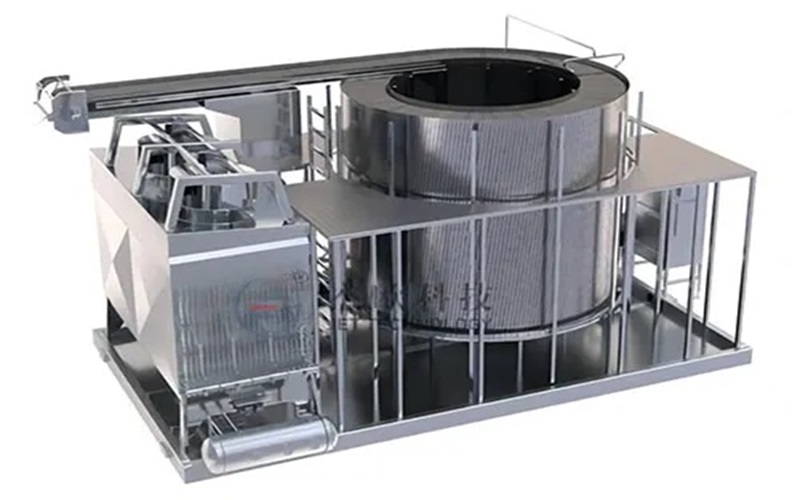
For long dwell time and high belt capacity, the buyer may compare the tunnel with a spiral freezer manufacturer. The integration review should consider not only floor area but also infeed/discharge elevation, belt path, structural loads, access, sanitation and product transfer risk.
Factory acceptance testing and site acceptance testing are structured verification stages that confirm equipment construction, controls and product performance against agreed criteria. They should be planned before the purchase order, because acceptance cannot be designed fairly after a dispute begins.
FAT normally verifies the manufactured equipment before shipment. Typical checks include dimensions, materials, workmanship, belt alignment and tracking, guards, doors, access panels, motors, instruments, electrical panel, I/O, control sequence, recipes, alarms, emergency stops, documentation and spare parts. A dry run can reveal mechanical and control issues even when full refrigeration is not available.
When product testing is possible at the factory, define the product source, conditioning, inlet temperature, loading and sampling. A short demonstration with ideal samples is not equivalent to a production-duration test. If product cannot be tested, the FAT protocol should clearly defer thermal performance to SAT without implying it was already proven.
SAT verifies the installed system under site conditions. The protocol should confirm utilities, refrigeration stability, line interfaces, loading, product throughput, inlet temperature, outlet condition, run duration, temperature distribution, alarms, defrost, cleaning and operator training. Record ambient conditions and any deviation from the design basis.
A strong performance guarantee contains five elements: the exact duty, the measurement method, the allowable tolerance, the test duration and the remedy. For example, it can define kilograms per hour of a named product with stated dimensions and inlet temperature, processed at an agreed loading pattern, with a maximum core temperature at discharge, sampled across belt lanes using calibrated instruments after stable operation.
Define retest rules. If the test fails because the product enters warmer than specified, the result may be invalid. If the product meets conditions but the equipment does not, the supplier should have a correction period and retest obligation. The contract should address what happens if performance cannot be achieved after reasonable correction.
Do not use an average result to hide a warm lane. Report sample distribution. Depending on product risk, the buyer may define a maximum, percentile or proportion below a limit. Also record belt speed, fan speed, air temperature, evaporator condition and refrigeration data so the cause of variation can be diagnosed.
A tunnel freezer commercial contract should translate the engineering basis into scope, schedule, payment, acceptance, warranty and support obligations. The best technical proposal can still become a poor project if commercial terms leave critical responsibilities undefined.
Attach the approved design basis, scope list, responsibility matrix, layout, utility schedule, performance guarantee and FAT/SAT protocols to the order. Control revisions. Sales presentations and emails should not be the only location of important commitments.
Set drawing and approval milestones. The buyer may need foundation loads, drain locations, utility points and maintenance clearances before fabrication is complete. Delayed information can affect the building and upstream equipment. Define the response time for buyer approvals and the impact of changes.
Documentation should include general arrangement drawings, foundation and load data, P&ID or refrigerant interface drawings, electrical schematics, I/O list, PLC backup, instrument list, material certificates where required, spare-parts list, lubrication plan, preventive-maintenance schedule, sanitation instructions, troubleshooting guide and operating manual. Destination-country language and compliance needs should be agreed early.
Warranty wording should state the start date, covered components, exclusions, labor and travel responsibility, response process and treatment of replaced parts. Some components may carry third-party manufacturer warranties. Clarify whether remote diagnostics are required before dispatching service personnel.
Ask for a critical-spares recommendation for commissioning, one year and two years. Separate low-cost items that can stop production from large items with long lead times. Confirm belt repair method, bearing and seal availability, motor standards, sensors, PLC hardware and proprietary components.
Training should be role-based. Operators need recipes, loading, alarms and daily checks. Sanitation teams need safe disassembly, chemicals, inspection and restart. Maintenance teams need belt tracking, lubrication, fan and evaporator inspection, instrument calibration and backup recovery. Supervisors need data interpretation and change control.
JET Technology’s project value should be evaluated through this complete lifecycle: inquiry, selection, design, manufacturing, FAT, shipment, installation, SAT, training and support. Brand appearance matters in B2B procurement when it is connected to documented responsibility and evidence, not merely repeated promotional claims.
A tunnel freezer RFQ template is a standardized information package that forces suppliers to quote the same product duty and project scope. It is the fastest way to improve proposal quality and reduce hidden assumptions.
Product: name, raw/cooked status, formulation category, dimensions, weight, tolerances, surface moisture, coating, packaging and photographs.
Temperature: minimum/normal/maximum inlet temperature; required core, surface or crust condition; cold-store destination.
Capacity: normal and peak kg/h, pieces per minute, shift hours, campaign length, changeovers and sanitation window.
Quality: maximum temperature spread, weight loss, deformation, belt marking, clumping, coating loss and presentation limits.
Site: available footprint and height, floor load, access route, drainage, ambient temperature/humidity and future expansion.
Utilities: electrical supply, refrigerant and design condition, water, compressed air, network and available refrigeration capacity.
Integration: upstream/downstream equipment, transfer heights, controls protocol, line speed and responsibility boundaries.
Hygiene: allergens, cleaning chemicals, washdown method, sanitation time, hygienic design standards and verification.
Compliance: destination-country machine safety, electrical, pressure, food-contact and documentation requirements.
Acceptance: FAT and SAT scope, product test, sample plan, instruments, run duration, guarantee and remedies.
Commercial: included/excluded scope, delivery basis, payment milestones, installation, training, warranty and spare parts.
Require each manufacturer to return a completed deviation list. A blank line should not mean “included.” It should be marked included, excluded, not applicable or clarification required. This makes the final commercial comparison far more reliable than comparing brochure specifications.
Frequently asked questions about tunnel freezer manufacturers focus on supplier comparison, guarantees, hygiene, testing, refrigeration and service.
Send product dimensions, weight, inlet and target temperature, normal and peak throughput, loading pattern, operating hours, sanitation method, site dimensions, refrigerant information and destination-country requirements. Photos and production videos help the supplier identify transfer and handling risks.
Yes, but the guarantee must define the product and conditions. It should state dimensions, inlet temperature, outlet criterion, loading, run duration, sampling and utilities. An unqualified kg/h promise cannot be verified fairly.
Check at least two or three references that are comparable in product, freezing duty and scale. Ask about commissioning, sanitation, output stability, service response and changes made after installation. A famous customer name is less useful than a technically comparable project.
It can simplify responsibility, but it is not always required. A local refrigeration contractor may be preferable where service capability or regulations favor local supply. In either case, use a written responsibility matrix and agreed design conditions.
FAT verifies construction, controls, documentation and available tests before shipment. SAT verifies the installed equipment and product performance at the customer site. The protocols and acceptance criteria should be agreed before the order.
JET can collect product and site data, compare freezer technologies, develop the equipment and line concept, coordinate refrigeration and controls, manufacture and test the machine, provide documentation, support installation and commissioning, conduct acceptance tests and train operating teams according to the agreed project scope.
Choosing a tunnel freezer manufacturer is a risk-management decision supported by engineering evidence. The supplier should prove product fit, define capacity conditions, demonstrate hygienic access, coordinate refrigeration and controls, manufacture under a quality plan, execute FAT and SAT, provide complete documents and support the equipment after startup.
The strongest comparison is not “Which quotation has the lowest price?” It is “Which supplier offers the clearest design basis, the most appropriate freezing mechanism, the most testable guarantee and the lowest total project risk?” Use the 10-point scorecard, normalize scope, verify references and attach the acceptance method to the contract. JET Technology can then be evaluated on the same evidence-based criteria as every competing manufacturer.


 English
 français
 Deutsch
 Español
 русский
 العربية


