
Jul 09, 2026
A spiral freezer project usually begins when a food factory has outgrown a batch room, a straight tunnel or a manual production arrangement. The processor needs more kilograms per hour, but the site may have limited floor area, fixed column spacing, restricted ceiling height or an existing refrigeration plant. At this stage, the purchasing question is not simply which spiral freezer model to buy. It is how to turn a production target into a reliable, hygienic and maintainable freezing line.
Spiral systems create long conveyor residence time by arranging the belt vertically around one or more drums. This makes them attractive for bakery products, poultry, meat, seafood, prepared meals and fried foods that require continuous high-throughput freezing. Their advantage depends on engineering quality: belt loading, tier spacing, airflow, drum design, sanitation access, control logic and refrigeration capacity must all support the same production objective.
This guide is written for factory owners, engineering managers and procurement teams planning capacity expansion. It explains how spiral freezers use vertical space, compares single and double configurations, provides sizing examples, outlines manufacturer evaluation and maps the project from concept to commissioning.
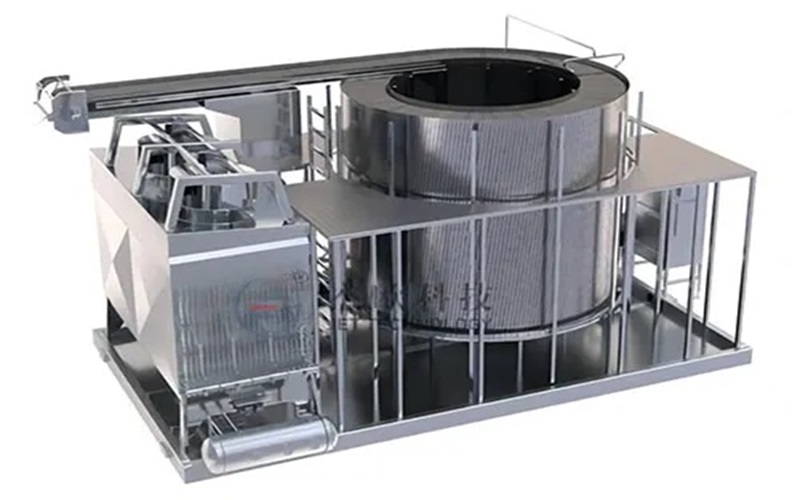
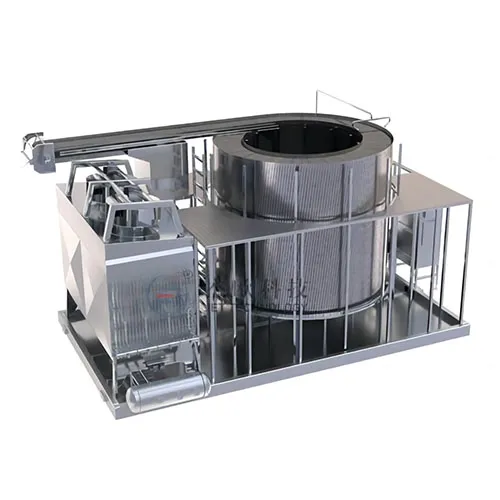
An industrial spiral freezer is a vertical continuous freezing system that carries food on a long belt arranged in stacked tiers to provide extended residence time within a compact production area.
A spiral freezer typically includes an insulated enclosure, conveyor belt, drum or cage, drive system, belt tensioning, evaporators, fans, air seals, access doors, drainage, controls and safety devices. Product enters at one level, travels upward or downward through the spiral path and exits after the required freezing time.
High-output food lines need continuous flow. A forming machine, fryer, oven or packaging line cannot operate efficiently if freezing is handled in small batches with repeated loading and unloading. A spiral freezer provides a controlled link between upstream production and downstream packing.
The vertical conveyor arrangement is the key economic feature. A straight tunnel may require a long room to provide 20 or 30 minutes of residence time. A spiral stores much of that conveyor length above the same floor area. This can preserve factory space for preparation, packaging, storage or future lines.
Spiral freezers are used for products that can travel on a belt and benefit from continuous processing. Common examples include:
Bread, buns, pizza, dough pieces and other bakery products
Chicken portions, nuggets, patties and breaded poultry
Meatballs, burgers, sausages and prepared meat products
Fish portions, shrimp products and seafood packs
Ready meals, trays and packaged foods
French fries, fried snacks and coated products
Ice cream, desserts and chilled products when configured for the process
The same spiral structure can be used for cooling, proofing or freezing, but the enclosure, airflow and refrigeration design are different. A buyer should specify the process objective and required product temperatures rather than asking only for a spiral conveyor.
The product must remain in the freezer long enough for heat to travel from its center to the surface and then into the cold air. Thin products can freeze faster than thick items even when they have the same weight. Packaging can add thermal resistance. Warm fried or baked products create a larger refrigeration load than chilled raw products.
Many frozen-food projects use minus 18 degrees Celsius or colder as a product storage and distribution reference after stabilization. The spiral air temperature is usually lower and may be designed around approximately minus 30 to minus 40 degrees Celsius, depending on product quality, residence time, refrigerant and project economics.
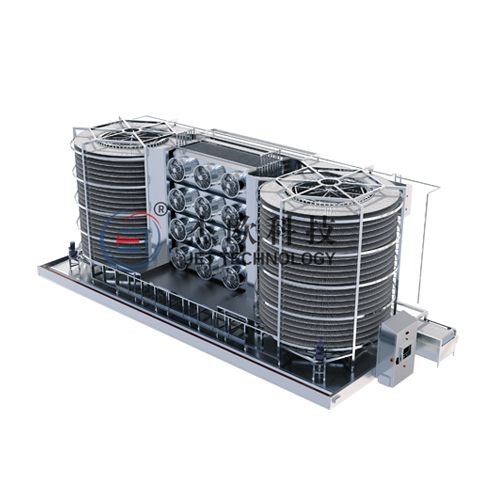
Spiral freezer capacity improvement comes from combining a long conveyor path, controlled belt loading and continuous airflow within vertically stacked tiers rather than extending the line across a long horizontal floor area.
Consider a simplified spiral with 20 active tiers and an average belt path of 20 meters per tier. The system contains approximately 400 meters of process belt before allowing for entry and discharge sections. At a belt speed of 0.25 meters per second, the theoretical travel time is about 26.7 minutes:
400 meters ÷ 0.25 meters per second ÷ 60 = 26.7 minutes.
This example shows why a spiral can deliver long residence time in a compact enclosure. Actual belt path varies with drum diameter, number of tiers, configuration and usable loading zone. A manufacturer should provide the effective belt length and residence-time range, not only the outer machine dimensions.
Residence time determines how much product is inside the freezer at any moment. For a line producing 2,000 kilograms per hour with a 25-minute residence time:
Product inventory = 2,000 × 25 ÷ 60 = approximately 833 kilograms.
This matters for startup, shutdown, line stoppages and food-safety control. If downstream packaging stops, the control system must prevent excessive residence or product collision. The factory also needs procedures for recovering or disposing of product after an emergency stop.
If the approved belt loading is 15 kilograms per square meter and approximately 833 kilograms must be inside the freezer, the theoretical occupied area is:
833 ÷ 15 = approximately 55.5 square meters.
The final installed belt area must be larger because product is not loaded on every transition, edge or discharge section. Fragile or individually separated products may require lower loading. Packages may have fixed spacing. The supplier should use the most restrictive approved product, not the easiest product, for sizing.
A straight tunnel providing hundreds of meters of conveyor would be impractical for most factories. It can increase building length, ducting, cleaning travel and product-transfer distance. A spiral concentrates that belt length into a vertical system. The exact space saving depends on the building and should be demonstrated with a layout drawing rather than a universal percentage.
Floor area is not the only constraint. The design must check ceiling height, roof structure, maintenance clearance, evaporator removal path, drainage slope, column grid, fire access and the route used to bring large components into the building.
A high-capacity spiral freezer cannot compensate for an unstable upstream line. If the oven or fryer delivers large surges, the belt may be overloaded. If the packaging line stops repeatedly, frozen products may accumulate at discharge.
The project should define normal, minimum and peak line rates. Buffers, synchronized drives and communication signals can reduce stoppages. A well-balanced line often produces more sellable kilograms per shift than a nominally larger freezer connected to unstable equipment.
A single spiral freezer uses one main spiral conveyor path, while a double spiral freezer uses two spiral sections or drums to provide greater belt length, process flexibility or higher capacity within the project layout.
| Project Factor | Single Spiral Freezer | Double Spiral Freezer | Decision Guidance |
|---|---|---|---|
| Typical capacity range | Suitable for medium and many high-output lines | Selected for very high capacity, long residence or complex routing | Use calculated belt area and heat load, not labels alone |
| Footprint | Generally smaller and simpler | Larger overall but can store more belt within a controlled area | Compare complete layout including evaporators and service access |
| Residence-time flexibility | Good within its belt-length and speed limits | Greater belt length can widen the operating range | Check minimum and maximum speed for every product recipe |
| Capital cost | Usually lower | Usually higher because of additional structure, belt and controls | Evaluate cost per kilogram of saleable output |
| Mechanical complexity | Fewer major conveyor elements | More transfer, drive or control considerations depending on design | Review maintenance access and spare-parts strategy |
| Best application | Factories with one main line and moderate-to-high throughput | Large plants, long freezing times or projects requiring high belt area | Choose from production data and building constraints |
A single spiral can be the strongest option when required residence time and belt area fit within one drum arrangement. It reduces the number of transfers and may simplify maintenance. Medium-capacity bakery, poultry, seafood and prepared-food lines often fit this configuration.
Buyers can review JET's broader spiral freezer range to understand available configurations, but final selection should follow a capacity and layout study. The machine must handle the heaviest product, highest entry temperature and peak hourly rate.
A double configuration can provide additional conveyor length when the product requires long residence time or the factory needs very high throughput. It can also support layouts in which entry and discharge positions must be separated or redirected.
The term double spiral does not describe one universal mechanical design. Buyers should ask whether the system uses two drums, how the belt transfers between sections, where drives are located and how airflow is divided. JET's double spiral freezer page can serve as a product reference, while project drawings should confirm the actual arrangement.
Traditional drum-driven systems guide the belt around a rotating cage or drum. Self-stacking systems use belt tiers that support one another, reducing or changing the central support concept. Each design has implications for belt tension, hygiene, product clearance and maintenance.
A self stacking spiral freezer can offer a compact belt-support arrangement for suitable applications. The processor should evaluate belt cleaning, access between tiers, product height and local service capability before choosing the architecture.
A quoted capacity such as 2,000 kilograms per hour is incomplete without the food name, piece dimensions, entry temperature, final temperature and belt loading. A freezer rated for two tonnes per hour of small chilled pieces may not freeze two tonnes per hour of thick warm products.
Request a capacity guarantee tied to defined product data and operating conditions. This gives the project team a measurable commissioning target.
Selecting a spiral freezer manufacturer means evaluating whether the supplier can convert product, capacity, building, sanitation and utility requirements into an integrated line with verifiable performance and long-term serviceability.
A qualified manufacturer should request detailed data before finalizing price. The information includes product dimensions, weight, formulation, entry temperature, target core temperature, normal and peak output, belt loading, factory dimensions, refrigerant and sanitation schedule.
A quotation based only on kilograms per hour is a warning sign. It may omit the real heat load, required residence time or building constraints. The supplier should provide a layout, process description, main dimensions, belt width, tier spacing, estimated load and utility requirements.
The spiral enclosure and the refrigeration system must perform together. The manufacturer should define the evaporating condition, evaporator duty, fan load, defrost method and required compressor capacity. If different suppliers provide the freezer and refrigeration plant, responsibility for final performance must be clear.
A simplified product-load calculation uses mass flow and enthalpy removal. If 2,000 kilograms per hour require an estimated 300 kilojoules per kilogram of heat removal, the product load is about 166.7 kilowatts:
2,000 × 300 ÷ 3,600 = 166.7 kilowatts.
The full design load is higher after fans, motors, infiltration, belt, structure and operating margin are included. Actual product enthalpy must be established from composition and temperatures.
Food plants need access to belts, drums, supports, floors, evaporators and drains. The manufacturer should explain how the machine is washed, how chemicals reach difficult areas and how water leaves the enclosure. Hollow sections, horizontal ledges and inaccessible overlaps can create hygiene risk.
Review weld finish, stainless-steel grade, door design, lighting, floor slope, belt washer, foam cleaning and drying. A freezer that is fast during production but slow to clean can reduce available production hours.
The conveyor is the mechanical heart of the system. The supplier should state belt material, width, edge type, allowable tension, minimum turning radius and product loading. The drive should support smooth startup and variable speed without damaging the belt.
Ask how belt tension is measured, how tracking is corrected and what happens during a jam. Safety devices should detect abnormal torque, belt movement and access-door opening.
A multi-product factory benefits from stored recipes for belt speed, air temperature, fan operation and defrost sequence. Controls should communicate with upstream and downstream equipment. Alarm history and trend data help maintenance teams diagnose performance loss.
The system should handle line stops without compromising product. Emergency-stop logic, restart sequence and product evacuation should be discussed during design rather than after commissioning.
Large spiral components may require site assembly. The manufacturer should provide foundation loads, opening requirements, crane plan, installation sequence and utility connection points. The factory should confirm that equipment can physically reach the installation area.
Commissioning should include mechanical checks, belt tracking, airflow balance, refrigeration pull-down, safety verification, sanitation review and product testing. Final acceptance criteria should be written into the contract.
Buyers need drawings, electrical diagrams, parts lists, maintenance procedures, lubrication instructions and troubleshooting guidance. Critical spare parts should be identified before shipment. Remote support and local service response should be defined.
A spiral freezer manufacturer should be evaluated over the expected equipment life, not only on initial price. Downtime on a high-capacity line can cost more than the difference between quotations.
Spiral freezer applications are continuous food processes in which long controlled residence time, compact floor space and stable belt handling support high-volume cooling or freezing.
Bread, buns, pastries, pizza and dough products benefit from gentle continuous conveying. Bakery products can be lightweight and sensitive to deformation. Tier spacing, belt support and airflow should protect shape while removing heat evenly.
Warm products from an oven may require a cooling step before freezing. The factory should evaluate whether cooling occurs inside a combined system or in a separate section. Moisture and condensation influence crust and package quality.
Chicken portions, nuggets and patties can be produced at high line speeds. The spiral should accept the pattern delivered by the fryer or forming line. Breaded products require controlled airflow to limit crumb loss.
Oil and food particles affect sanitation. The belt washer, floor drainage and evaporator protection should be designed for the actual residue.
Burgers, meatballs, sausages and cooked meat portions can use spiral freezing for consistent flow to packaging. Product thickness and fat content influence freezing time. Formed products need enough surface firmness before transfers or stacking forces can affect shape.
Fish portions, prepared shrimp products and seafood packages can be frozen in a spiral when belt handling and residence time suit the format. Loose small seafood pieces may be better suited to a tunnel or fluidized system, while trays, blocks and formed products can fit spiral conveying.
The manufacturer should not recommend a spiral simply because capacity is high. The required finished format and piece separation must guide the choice.
Trays and packages benefit from stable support and predictable spacing. The slowest thermal point is often the center of the package. Probe tests should verify that all package positions achieve the specified temperature.
Packaging materials must remain stable at low temperature. Seals, lids and labels should be tested under actual airflow and handling conditions.
French fries and fried items may enter the system warm. High sensible heat increases refrigeration demand. Oil residue influences cleaning and evaporator fouling. Product distribution must avoid piles that restrict airflow.
Spiral freezer project delivery is the coordinated engineering process that connects product trials, capacity calculations, building layout, fabrication, installation, refrigeration and performance acceptance.
The project team identifies all products, not only the current main item. It records normal and peak output, dimensions, temperatures, future expansion and cleaning schedule. The most difficult approved product becomes a design case.
The manufacturer places the spiral in the real building drawing. The study checks entry and discharge elevation, operator routes, columns, drains, ceiling, evaporator service and connection to upstream and downstream machines.
Utilities include electrical power, refrigeration piping, defrost water or hot gas, compressed air, cleaning water and drainage. Utility peaks should be checked against available plant capacity.
The proposal defines belt width, number of tiers, tier spacing, belt length, speed range, residence time, refrigerating duty, fan power and enclosure dimensions. The buyer and manufacturer review risks such as product sticking, package deformation, crumb loss, frost and line stoppage.
During fabrication, the buyer can review drawings, material certificates and component brands. Factory inspection may include mechanical rotation, control simulation, safety devices and documentation. Full freezing performance normally requires the installed refrigeration system and product.
Installation includes enclosure assembly, conveyor alignment, evaporators, electrical work and piping. Coordination with building contractors and refrigeration installers is essential. Late changes to floor level or entry height can affect the whole line.
Commissioning begins without product, then progresses to product trials. The team verifies belt tracking, fan rotation, air temperature, defrost, alarms and safety. Product tests should run at defined entry conditions and peak capacity long enough to show stable operation.
Acceptance should evaluate output, core temperature, product appearance, separation, dehydration, energy data where specified and uninterrupted run time. Results should be recorded rather than judged only by visual observation.
JET Cold Chain supplies customized spiral freezing systems and engineering support for food manufacturers that require continuous high-capacity processing, compact layout and integrated refrigeration.
JET can develop single, double or self-stacking spiral concepts according to product, output, residence time and building constraints. This helps buyers avoid oversizing a standard model or underestimating the belt area required for the most demanding product.
JET can coordinate freezer design with refrigeration equipment and production-line interfaces. Entry and discharge heights, belt speed, controls and utility demand can be reviewed as part of one project.
Global projects require clear drawings, installation guidance and commissioning procedures. JET can support site preparation, assembly, startup, product tests and operator training according to the agreed project scope.
Food name, dimensions, weight and package format
Normal and peak hourly capacity
Entry temperature and required core temperature
Required residence time if already tested
Available floor dimensions and clear height
Preferred entry and discharge elevations
Refrigerant and available refrigeration plant data
Power supply and local environmental conditions
Daily production hours and sanitation schedule
Upstream and downstream machine drawings
Future expansion requirements
These details allow JET Cold Chain to prepare a technically relevant layout and quotation instead of offering a generic capacity label.
These spiral freezer FAQs address capacity, space, configuration, refrigeration and supplier-selection questions for food-processing expansion projects.
Spiral freezers can process bakery products, poultry, meat, seafood portions, ready meals, packages, fried foods and many formed products. The food must be compatible with belt conveying, tier spacing and airflow. Loose small particles may be better suited to a tunnel or fluidized freezer.
A single spiral uses one main spiral path and is suitable for many medium- and high-capacity lines. A double spiral provides additional belt length or routing flexibility for high capacity or long residence time. The choice should be calculated from product and building data.
Systems can process several hundred kilograms per hour to multiple tonnes per hour. Capacity depends on food heat load, piece thickness, entry temperature, belt loading, residence time, airflow and refrigeration capacity. Quotes should state the exact design product.
The saving depends on the residence time, belt length and alternative layout. A spiral stores a long belt vertically, so it is generally more compact than a straight tunnel with equivalent conveyor length. A scaled layout provides the only reliable project-specific comparison.
Evaluate product engineering, refrigeration integration, hygienic design, belt and drive knowledge, controls, installation method, commissioning criteria, documentation, spare parts and service. Do not compare only price or nominal kilograms per hour.
Large spiral systems may use ammonia, carbon dioxide or suitable fluorinated refrigerants depending on plant scale, regulations and owner preference. The refrigeration system must match product load, fans, infiltration, defrost and required operating time.
A successful spiral freezer investment is a factory-capacity project that aligns belt area, residence time, refrigeration, building space, sanitation, automation and service around a defined food process.
Single, double and self-stacking configurations are tools for solving different layout and capacity requirements. The correct choice cannot be made from a model name alone. It requires product data, heat-load calculation, belt-loading validation and a realistic factory drawing.
Processors should select a manufacturer that can manage the complete engineering path from initial specification to commissioning. JET Cold Chain can support high-capacity food manufacturers with customized spiral systems, refrigeration integration and project services designed around measurable production requirements.
FAO/WHO Codex Alimentarius — International Food Standards: https://www.fao.org/fao-who-codexalimentarius/codex-texts/list-standards/en/
USDA Food Safety and Inspection Service — Freezing and Food Safety: https://www.fsis.usda.gov/food-safety/safe-food-handling-and-preparation/food-safety-basics/freezing-and-food-safety
U.S. Food and Drug Administration — Preventive Controls for Human Food: https://www.fda.gov/food/food-safety-modernization-act-fsma/fsma-final-rule-preventive-controls-human-food

 English
 français
 Deutsch
 Español
 русский
 العربية


