
Jul 22, 2026
A plate freezer can be one of the most productive freezing assets in a seafood, meat or block-food plant, but only when the equipment is matched to the product geometry, package thickness, batch cycle, refrigeration system and sanitation plan. Buyers who compare only nominal capacity or plate freezer price can overlook the factors that determine real output: loading time, contact pressure, plate spacing, defrost time, product release, evaporating temperature and the number of operating cycles completed in a shift.
This buying guide explains how plate freezing technology works, when to choose a horizontal or vertical configuration, how to estimate capacity, which specifications should appear in a request for quotation and how to compare manufacturers. It is written for seafood processors, meat plants, cold-storage operators, prepared-food producers and engineering teams planning new or upgraded block freezing lines.Quick freezing is not only a refrigeration question. Product thickness, packaging, surface contact and heat transfer determine how quickly the thermal center passes through the main ice-crystal formation zone. Codex standards for multiple quick-frozen foods use -18°C (0°F) at the thermal center after thermal stabilization as a completion reference. The freezer must therefore be selected around the actual product and process, not a generic chamber temperature.
Definition: A plate freezer is an industrial contact freezer that removes heat by pressing packaged or block-shaped food against refrigerant-cooled metal plates, creating a short heat-transfer path and a relatively uniform frozen shape.Unlike an air-blast freezer, which transfers heat from the food to moving cold air, a contact plate freezer places the product directly against cold surfaces. Refrigerant or a secondary coolant circulates through channels inside the plates. Heat flows from the food through its packaging and into the plate, then returns to the refrigeration system.The method is most effective when the product has a flat or compressible shape and both major surfaces can contact the plates. Fish blocks, shrimp blocks, meat cartons, packaged minced meat, fillets in trays and rectangular food packs are common examples. Air gaps, irregular package heights and overfilled cartons reduce contact and create warmer areas, so product preparation is part of freezer performance.JET offers both horizontal and vertical configurations on its plate freezer page. The published product information describes contact freezing through refrigerant-filled plates and positions the equipment for seafood, meat, poultry, prepared foods and other products that benefit from direct heat transfer.
Air has a much lower heat-transfer capability than metal-to-package contact. When a package sits against a cold aluminum plate, the conductive path can remove heat efficiently, provided the package is flat and pressure is distributed evenly. The result can be a shorter cycle, less exposure to drying airflow and a compact block suitable for stacking, storage and transport.The actual freezing time depends on more than plate temperature. Important variables include initial product temperature, final core temperature, water content, fat content, package material, block thickness, loading density and contact quality. Two products with the same weight can require different cycles if one is a thin fish block and the other is a thick carton of fatty meat.
Most plate freezers operate in repeated batches: load, close or press the plates, freeze, release pressure, defrost if necessary, unload and reload. The nameplate capacity must therefore be converted into kilograms per cycle and cycles per day. A machine that holds 1,000 kg per batch but completes only three cycles produces less daily output than a 700 kg machine that completes six stable cycles.Loading and unloading labor can become the hidden bottleneck. Automatic plate movement, hydraulic control, product elevators, pallet handling or conveyor integration may improve total line efficiency even when the refrigeration capacity remains unchanged.
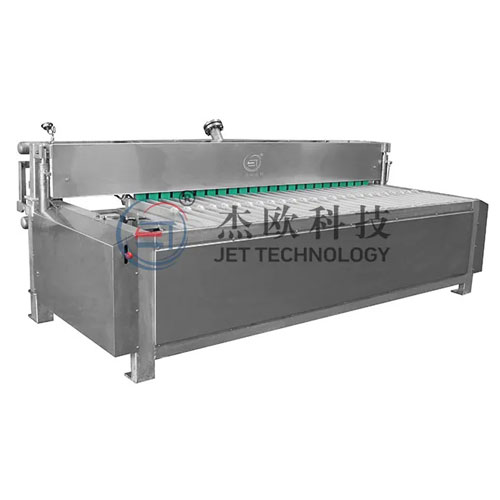
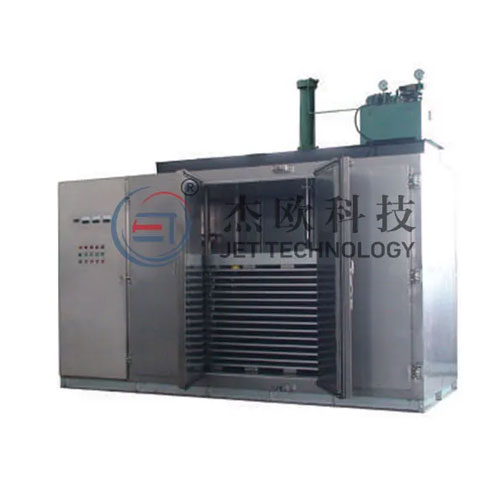
Definition: A vertical plate freezer holds product between upright refrigerated plates, while a horizontal plate freezer freezes packages or blocks between stacked horizontal plates that open for loading and unloading.Both types use contact heat transfer, but their product handling, block shape and factory layout differ. The correct choice depends on whether the line handles loose product that forms a block, prepacked cartons, trays, portion packs or uniform molds.
| Selection Factor | Vertical Plate Freezer | Horizontal Plate Freezer | Buying Implication |
|---|---|---|---|
| Typical product format | Loose fish, seafood, meat pieces or product loaded into vertical stations to form blocks | Cartons, trays, flat packages, fillet blocks and uniform molds | Match the plate orientation to the actual loading method and finished pack |
| Block formation | Product can be compressed into dense, stackable vertical blocks | Produces flat, controlled packages between horizontal plates | Confirm final block dimensions with downstream storage and customers |
| Loading method | Often top loading, pumping or manual filling into stations | Manual, trolley, elevator or automated horizontal loading | Include labor and loading time in cycle calculations |
| Product contact | Good when product fills the station and contacts both plate surfaces | Good when package heights are uniform and plates close evenly | Specify allowed height tolerance and package compressibility |
| Best-known applications | Whole fish, shrimp, seafood blocks and meat blocks | Fish fillets, cartons, packaged meat, prepared foods and flat products | Use trials for irregular or mixed products |
| Factory integration | Can be efficient for bulk block production and compact cold areas | Can integrate with plate lifts, trolleys and packaging lines | Evaluate floor space, ceiling height and material flow |
A vertical plate freezer is commonly selected when the processor wants dense blocks made from loose seafood or meat pieces. The vertical stations can form regular blocks that are efficient to palletize and store. This can be valuable for fishing vessels, seafood plants, shore-based freezing facilities and processors supplying industrial raw material.Buyers should verify filling uniformity, drainage, block release and the strength of the final frozen block. The loading method must avoid large voids. If products bridge inside the station or do not settle evenly, contact area decreases and the cycle becomes less predictable.
A horizontal plate freezer is usually more suitable for cartons, trays, packaged fillets, portioned meat and molded products with controlled thickness. The plates can apply gentle pressure and maintain flat packages, supporting uniform stacking and predictable heat transfer.When reviewing a horizontal plate freezer for sale, ask whether the quoted capacity assumes a specific block thickness and loading temperature. A capacity figure based on 50 mm fish blocks cannot be applied directly to 100 mm cartons of meat. The quotation should state the product, dimensions, inlet temperature, outlet temperature, cycle time and refrigeration conditions used for the calculation.
Manual equipment may suit lower labor-cost plants or seasonal production, while automated plate movement and handling can improve repeatability and reduce exposure to cold areas. Automation should be justified by daily batches, product weight, occupational safety and the cost of downtime.A reliable design should include interlocks, pressure control, emergency stops and clear access for inspection. Hydraulic components should be positioned and protected so that leakage can be detected and managed without contaminating food zones.
Definition: Plate freezer applications are processes in which seafood, meat or packaged foods have sufficiently flat, regular surfaces to achieve efficient contact freezing and consistent block geometry.The strongest applications are not defined only by food category. They are defined by shape, thickness, packaging and required throughput. Plate freezing may be ideal for one seafood product and unsuitable for another if the latter is irregular, individually sold or easily damaged by pressure.
Plate freezers are widely used for whole fish, fillets, shrimp, scallops and seafood blocks. Fast heat removal can support texture and reduce dehydration compared with prolonged exposure to high-velocity air. The finished block can also protect small pieces during cold storage and shipping.Seafood plants should connect equipment selection with their HACCP plan, water management and cleaning procedures. FDA seafood guidance requires processors to identify hazards reasonably likely to occur and establish controls. The freezer does not replace hazard analysis; it must fit into a controlled process that includes receiving temperature, preparation, freezing, glazing or packaging, storage and distribution.JET's industrial food freezing equipment solutions for aquatic products can be reviewed alongside the plate freezer because the correct technology may change by product. Loose peas or small shrimp intended for individual sale may require fluidization, while fish blocks or packaged fillets may be better suited to contact plates.
Boneless meat, minced meat, trimmings, poultry portions and industrial ingredient blocks can be frozen in plates when the load is formed into uniform packages. Fast and even freezing helps the processor create blocks that are easier to palletize, temper, slice or use in further processing.Fat content, bone, package thickness and initial temperature influence cycle time. Bone-in pieces can create uneven surfaces, while warm product increases refrigeration load. The engineering calculation should use the highest expected inlet temperature rather than an ideal laboratory value.
Lasagna, meal components, sauces in flat packs, bakery products and other prepared foods can use horizontal plate freezing when the packaging tolerates pressure. The package must remain sealed and maintain the correct thickness. Flexible packs may require trays or frames to prevent distortion.For products with delicate toppings, irregular height or premium appearance requirements, a tunnel or spiral freezer may be better. A comparative product trial is the safest method when the packaging and surface quality are critical.
Vertical plate freezers are often considered for vessels or remote seafood facilities because they can create dense blocks in a relatively compact footprint. Marine applications require additional attention to corrosion resistance, vessel motion, refrigerant selection, hydraulic reliability and service access.The buyer should specify seawater exposure, ambient conditions, power quality and available technical support. A shore-based machine should not be assumed suitable for marine duty without design confirmation.
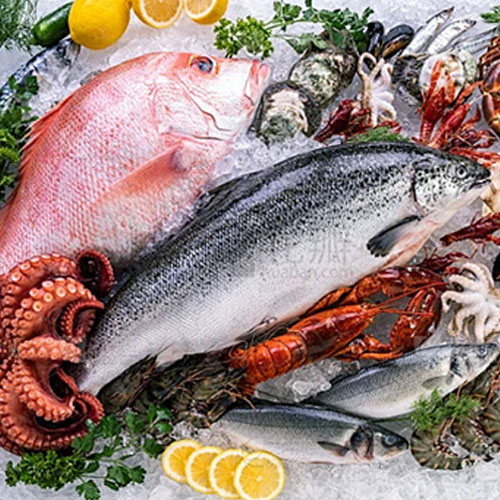
Plate freezer sizing is the calculation of required batch load, plate area, refrigeration duty and daily cycle count based on product heat load, block geometry, operating hours and production peaks.Start with the production target, then work backward. The required daily output, operating hours and acceptable number of batches determine the minimum batch capacity. Add a realistic allowance for loading, unloading, defrosting, cleaning and production variation.
Use the following planning formula:Required batch capacity = daily freezing demand ÷ planned cycles per day × design margin.For example, a plant that must freeze 8,000 kg per day in eight cycles requires 1,000 kg per cycle. Adding a 15% margin gives a target of 1,150 kg per cycle. The margin should not be used to hide uncertain freezing time; it is for realistic production variation.
A two-hour freezing time does not mean twelve cycles in a 24-hour day. The complete cycle includes loading, plate closing, freezing, pressure release, defrost, unloading and inspection. If freezing takes 120 minutes and handling takes 30 minutes, the practical cycle is at least 150 minutes before cleaning and shift constraints.Production planning should use demonstrated cycle data for the actual block. If a manufacturer supplies only theoretical heat-load calculations, request a reference project or product test.
Specify length, width, thickness, unit weight, packaging material and allowed compression. Thickness has a major effect because heat must travel from the thermal center to the plate surface. A modest increase in thickness can increase freezing time substantially.Package height variation also matters. If one carton is taller than the others, the plate can contact it first and leave air gaps around shorter cartons. Define manufacturing tolerances and consider spacers, frames or standardized molds.
The refrigeration system must remove sensible heat above the freezing point, latent heat during ice formation, sensible heat below the freezing point and heat from packaging, equipment, infiltration and defrost. The calculation should use product composition and inlet conditions.JET supplies several refrigeration system options, including ammonia, Freon and CO₂ configurations. Refrigerant choice should reflect local regulations, plant scale, operator competence, energy cost and service availability.
Many quick-frozen food standards use -18°C at the thermal center after stabilization. The refrigeration setpoint will normally be lower than the required product center temperature to create a useful temperature difference. The exact evaporating condition must be engineered; simply specifying “-40°C freezer” does not guarantee a specific product cycle.
A plate freezer buying checklist is a structured specification that allows processors to compare capacity, plate construction, refrigeration performance, sanitation, controls, safety, installation and lifecycle support on the same basis.The most useful request for quotation includes product data and factory conditions, not only a desired machine size. Suppliers should be asked to state assumptions and exclusions.
Food type, recipe or approximate water and fat content
Unit or block dimensions and package material
Inlet temperature and required center temperature
Hourly and daily capacity, peak season demand and operating shifts
Expected freezing time and complete batch cycle
Allowed weight loss, deformation and package marking
Plate material, corrosion resistance and internal refrigerant channels
Plate dimensions, opening stroke and spacing adjustment
Maximum pressure and pressure-control method
Hydraulic system design, seals and leakage protection
Frame material, floor loading and anchoring requirements
Product release and defrost method
For seafood plants, verify whether plate material and surrounding components are suitable for saline environments. Ask how damaged plates can be isolated, repaired or replaced and whether spare plates are available.
Food-zone stainless-steel grade and surface finish
Drainage, sloped surfaces and elimination of water traps
Access to plates, hydraulic zones and hidden frames
Cleaning chemicals and maximum wash temperature
Separation of lubricants and hydraulic components from food areas
Validation of cleaning time between batches or shifts
PLC recipe control for product-specific cycles
Plate pressure, refrigerant temperature and alarm monitoring
Core-temperature measurement method
Emergency stops, guards and interlocks
Remote diagnostics and event history
Electrical standards, language and documentation
Refrigerant supply and return conditions
Electrical load, voltage and frequency
Water, compressed air and drainage requirements
Floor load, foundation, ceiling height and maintenance clearances
Transport dimensions and site access
Commissioning, operator training and acceptance testing
Plate freezer total cost of ownership includes the purchase price plus refrigeration energy, labor, water, maintenance, spare parts, downtime, installation and the financial effect of product yield and cycle consistency.Plate freezer price varies with capacity, plate area, automation, material grade, refrigerant configuration and project scope. A low equipment price can be offset by slow loading, poor contact, excessive defrosting or unavailable spare parts.
A useful financial measure is:Freezing cost per kilogram = annual energy + labor + water + maintenance + depreciation + downtime cost ÷ annual saleable frozen output.Saleable output matters. If broken blocks, damaged packaging or inconsistent core temperature require rework, the apparent capacity does not represent profitable production.
JET's published plate freezer information cites a representative 25–30% power reduction compared with blast freezing and an example in which a 48-hour cycle is reduced to 24 hours. These figures should be treated as manufacturer-stated comparisons under specific conditions, not universal guarantees. Ask for the reference product, block thickness, ambient conditions, refrigerant temperatures and measurement boundary.The strongest quotation provides a calculated refrigeration load and an expected cycle for the buyer's product. Performance should be confirmed during factory or site acceptance testing.
Manual loading can be economical for low-volume operations but expensive at high throughput. Calculate how many operators are required, how long they remain in cold zones and whether loading delays reduce daily cycles. Automation may have a higher initial price but a lower cost per kilogram when production is continuous.
A capable plate freezer manufacturer combines contact-freezing engineering, refrigeration integration, hygienic construction, product testing, commissioning and after-sales support into one production-line solution.JET Technology positions itself as an integrated supplier of intelligent quick-freezing and food-processing equipment. Its plate freezer range includes horizontal and vertical designs, while its wider portfolio includes tunnel freezers, spiral freezers and complete refrigeration systems. This allows a processor to compare technologies instead of forcing every product into one machine type.
JET can evaluate whether the product should be frozen as a block, in a package or as separate pieces. This distinction is important: a plate freezer is usually strong for flat and block products, while an IQF tunnel or fluidized bed system may be better for individual loose pieces.
A plate freezer depends on stable refrigerant supply, defrost control and plant utilities. Coordinating the freezer with the refrigeration system, product handling and cold storage can reduce interface risk. Buyers should provide site layout, existing compressor data and planned expansion so the system can be engineered as a whole.
Product name, photographs and formulation information
Block or package dimensions and weight
Inlet and target center temperatures
Required kilograms per hour and per day
Operating hours and number of shifts
Preferred vertical or horizontal configuration, if known
Refrigerant and utility information
Factory layout and available installation space
Required automation, cleaning and documentation standards
With this information, JET can recommend a configuration, estimate cycle time and identify whether product trials are needed. Buyers can use the company's contact page to request a tailored plate freezing line proposal and commercial quotation.
These plate freezer FAQs address the most common technical and purchasing questions from seafood, meat and block-food processors.
Plate freezers are best for flat packages, cartons, trays and block products that can contact two cold plates. Fish blocks, shrimp blocks, meat cartons, minced meat and packaged fillets are common applications. Irregular loose products intended to remain separate may require an IQF tunnel or fluidized bed freezer.
A vertical plate freezer is often preferred for forming blocks from loose fish or seafood, while a horizontal plate freezer is usually better for cartons, trays and flat packages. The correct choice depends on the final product format, loading method and required block dimensions.
Capacity is calculated from kilograms per batch multiplied by practical cycles per day. The cycle must include loading, plate closing, freezing, defrosting, unloading and cleaning. Product thickness, inlet temperature and contact quality must be included in the freezing-time calculation.
Many Codex quick-frozen food standards use -18°C (0°F) at the thermal center after thermal stabilization. The applicable legal and customer requirements should be confirmed for each product and market.
Price depends on plate area, batch capacity, automation, construction materials, refrigeration scope and installation requirements. Buyers should compare total cost per kilogram and request a quotation based on the actual product rather than relying on a generic price range.
The manufacturer needs product type, package dimensions, inlet and target temperatures, hourly capacity, operating schedule, refrigerant, utilities, factory layout and hygiene requirements. Photographs or samples improve the accuracy of the recommendation.
The best plate freezer is the system that maintains reliable surface contact, reaches the required center temperature, completes enough practical cycles and integrates safely with the plant's refrigeration and sanitation systems.Vertical plate freezers are strong for dense seafood and meat blocks, while horizontal plate freezers are well suited to cartons, trays and flat packaged foods. Neither configuration should be selected from nominal capacity alone. Product thickness, package tolerance, loading time, plate pressure and defrosting determine the real output.Prepare a detailed product and utility specification, calculate kilograms per complete cycle, request performance assumptions and compare lifecycle cost. JET can support processors with plate freezer selection, refrigeration integration and customized production-line planning for seafood, meat and block freezing applications.
USDA Food Safety and Inspection Service — Freezing and Food Safety: https://www.fsis.usda.gov/food-safety/safe-food-handling-and-preparation/food-safety-basics/freezing-and-food-safety
U.S. FDA — Fish and Fishery Products Hazards and Controls Guidance: https://www.fda.gov/food/seafood-guidance-documents-regulatory-information/fish-and-fishery-products-hazards-and-controls
FAO/WHO Codex Alimentarius — International Food Standards: https://www.fao.org/fao-who-codexalimentarius/codex-texts/list-standards/en/


 English
 français
 Deutsch
 Español
 русский
 العربية


