JET(Jiangsu) Technology Co., Ltd.

The Engineering Excellence of Double Spiral Freezers: A High-Capacity Guide for Global Food Processors

Jun 03, 2026

Table of Content [Hide]

    1. Introduction: The High-Volume Dilemma

    In the hyper-competitive global food market, scaling from 500kg/h to 5,000kg/h is not just about “buying a bigger machine.” It is about managing thermal inertia, floor space, and operational costs (OPEX). For meat, poultry, and prepared meal giants, the Double Spiral Freezer represents the pinnacle of industrial cooling. Unlike single-drum systems, the twin-drum configuration allows for specialized “staged freezing,” a technique essential for maintaining the cellular integrity of high-value proteins.

    2. Technical Architecture: Two Drums, One Goal

    The JET Double Spiral Freezer utilizes two independent but synchronized drums.
    • The First Drum (Crust Freezing): Focuses on “locking” the product. By applying high-velocity air at -35°C to -40°C, the outer layer is instantly frozen. This prevents moisture migration (dehydration) and ensures the product maintains its weight—crucial for profitability.

    • The Second Drum (Core Freezing): Provides the dwell time needed for deep-core stabilization.
    Technical Data Table: Typical JET Double Spiral Specifications
    FeatureSpecification Range
    Production Capacity1,000 kg/h – 7,000 kg/h (Based on Fried Chicken/Patties)
    Belt Width400mm, 600mm, 760mm, 915mm, up to 1200mm
    Inlet/Outlet Temp+80°C (Hot-fried) or +15°C (Chilled) to -18°C Core
    Evaporator Temp-40°C to -45°C
    RefrigerantsAmmonia (NH3), Freon (R404A/R507), CO2 (Sub-critical)
    MaterialAll SUS304 Stainless Steel (SUS316 optional for high-salt environments)

    3. Airflow Dynamics: Horizontal vs. Vertical

    One of the biggest failures in lower-end spiral freezers is “dead zones”—areas where air stagnates, leading to uneven freezing.
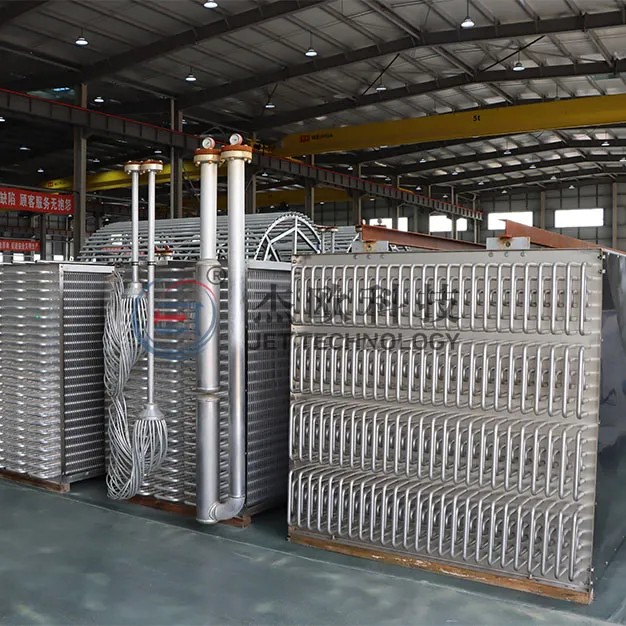
    • Horizontal Cross-Flow: JET utilizes a horizontal airflow pattern where air is forced across the belt. This ensures that even the products in the center of the belt receive the same Delta T (Temperature difference) as those on the edges.

    • Pressure Management: By using high-pressure centrifugal fans (instead of standard axial fans), JET ensures the air penetrates through thick product loads, reducing freezing time by 15-20% compared to NTSQUARE or Moon-Tech’s standard models.
      double-drum-spiral-freezer-manufacturer.jpg

    4. Hygienic Design: Meeting USDA and EHEDG Standards

    For the modern food factory, the “Cost of Cleaning” is often higher than the “Cost of Power.”
    • Fully Welded Structure: We eliminate bolt-and-nut assemblies inside the freezing zone. Why? Because every bolt thread is a potential breeding ground for Listeria and Salmonella.

    • Sloped Flooring: The internal floor is sloped toward a central drain (typically 1:50 gradient), ensuring that after a CIP (Clean-in-Place) cycle, no standing water remains.
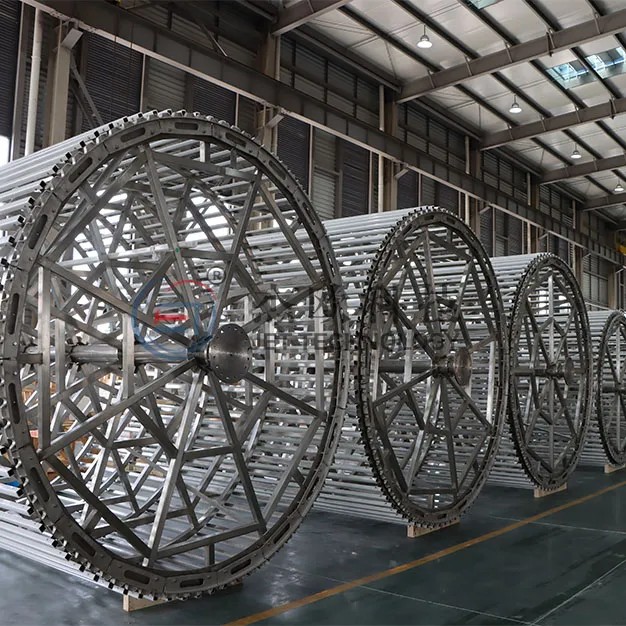
    • The Drum Drive: JET uses a heavy-duty stainless steel chain drive with food-grade lubrication or “dry-running” high-density polyethylene (HDPE) wear strips to prevent product contamination.
    spiral-freezer-systems-china-company.jpg

    5. ROI Analysis: The “Yield” Factor

    In a 2,000 kg/h line, a 1% difference in dehydration (weight loss) equals 20 kg of product lost per hour. Over a 20-hour shift, that is 400 kg. At $5/kg, that’s a $2,000 loss per day.
    JET’s Double Spiral systems are engineered to achieve weight loss below 0.6%, compared to the 1.2% - 1.5% industry average. This means the machine effectively “pays for itself” within 14-18 months of operation.


    References